
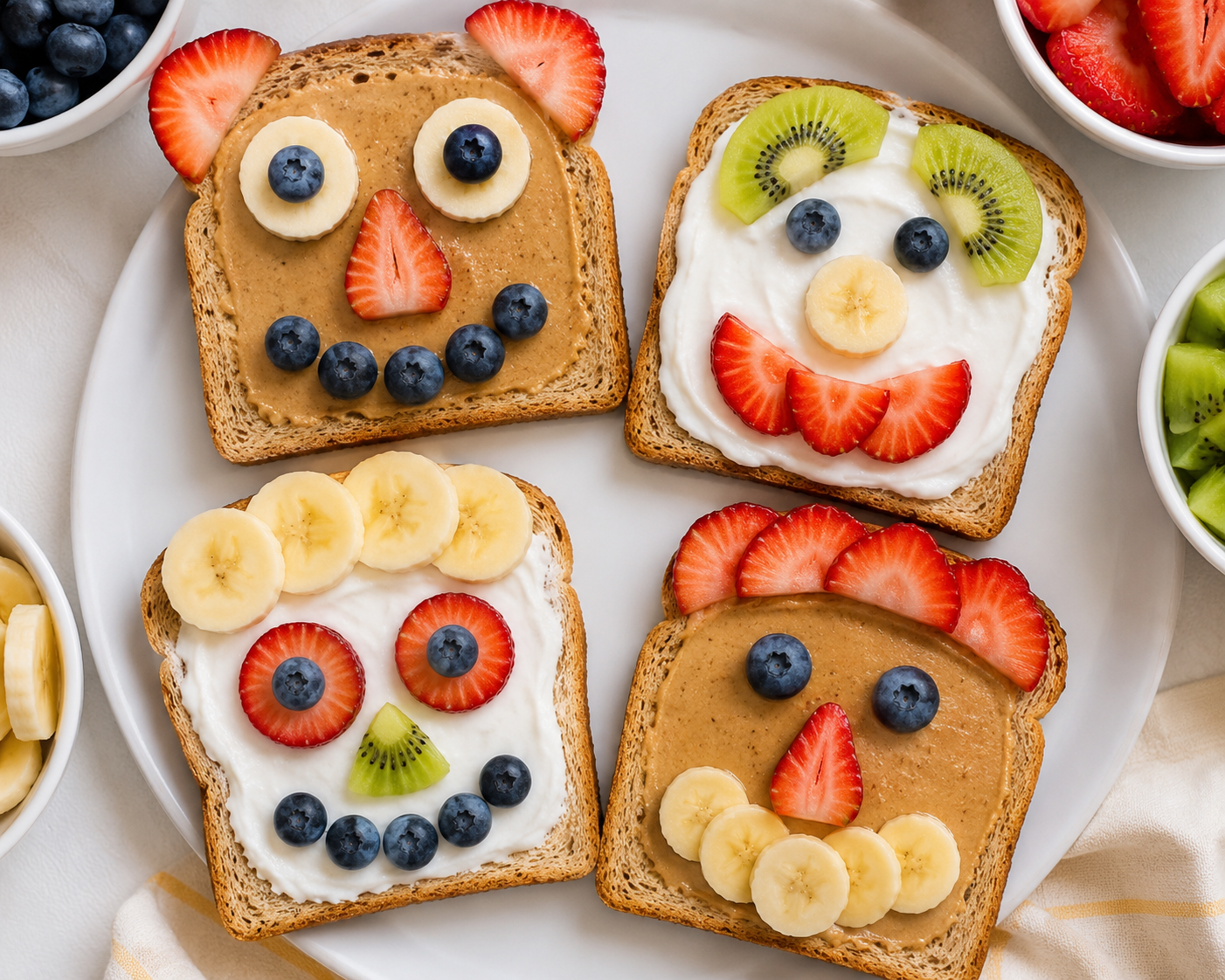
Turn breakfast into a playful food exploration activity with these colourful Breakfast Toast Faces. Children can spread, arrange, choose, and create their own fruit-filled expressions, making this simple breakfast a fun opportunity to build food familiarity and independence.
Whole grain toast or waffles provide a satisfying base, while Greek yogurt or seed butter and a variety of fruit add familiar flavours and textures. Giving children some choice in how they build their faces can also support positive mealtime experiences without pressure to taste every ingredient.
You’ll need
- 4 slices whole wheat bread or 4 whole wheat waffles, toasted
- ½ cup plain Greek yogurt or seed butter
- 1 banana, sliced
- 4 strawberries, sliced
- ¼ cup blueberries
- 1 kiwi, peeled and sliced (optional)
- Raisins (optional; see safety note below)
Instructions
- Spread each piece of toast or waffle with a thin layer of Greek yogurt or seed butter.
- Invite children to arrange the fruit to make their own toast face. Banana slices or blueberries can become eyes, strawberries can make a smile, and pieces of kiwi or banana can become hair or ears.
- Encourage creativity by inviting children to give their toast a name or create a silly expression.
- Serve immediately and enjoy together.
Why this breakfast works well in childcare
This hands-on breakfast combines eating with sensory exploration. Children can notice the colours, shapes, smells, and textures of different fruits while deciding how to arrange them. Even when a child does not eat every fruit, interacting with foods in a relaxed setting can provide valuable exposure and help build familiarity over time.
Spreading and placing toppings also offer opportunities to practise self-feeding and fine motor skills. Educators can keep the experience positive by allowing children to decide what goes on their toast and how much they choose to eat.
Conversation starter
Bring a little storytelling to the table by asking, “Is your toast feeling happy, surprised, or sleepy today?” Or try, “Which fruit did you choose first, and why?”
These simple questions encourage children to talk about food through colour, texture, preference, and imagination rather than focusing on how much they eat.
Allergy and food safety notes
For a dairy-free option, replace Greek yogurt with an appropriate unsweetened dairy-free alternative or seed butter. When using seed butter, confirm that it meets the childcare centre’s allergy policies.
Prepare fruit in shapes and sizes appropriate for each child’s developmental abilities. Blueberries should be modified as needed for younger children, such as by flattening or quartering them. Whole raisins can be a choking hazard for young children, so omit them for toddlers or modify them appropriately according to the centre’s safe-feeding practices.